We live in a chemical soup. We are constantly consuming, absorbing them internally as well bombarded from the outside.
It is a study from inside out and the long-term effects on both the environment and the future of the human race.
I will study this through three characters living in India. Ganesh is a farmer living in Yevetmal, Maharastra. Gita who is from a middle class background is in her twenties, living in Mumbai. Lakshmi is from the slums and is pregnant. She lives in Patancheru, Andhra Pradesh. These are real life characters.
Sunita Narain, renowned environmentalist will analyze this issue on a scientific basis which will be comprehensible to the lay person.
The presence of the unborn child that Lakshmi is carrying is felt through the film.
The film will be based on a blood test of these 3 characters.
Through the list of chemicals we reach out to the source of its origin. These test results will be spread throughout the film and will act as the connecting links.
Like for example if endosulphan is traced both in Ganesh and Gita’s blood it can be proved that it is from the chemical that Ganesh sprays on his farm and the residue left in the food which Gita eats.
Ganesh uses fertilizers and pesticides on his farm. Gita who is looking for a husband is using all kinds of cosmetics to make her look more beautiful, Lakshmi the pregnant woman lives close to an industrial area which manufactures pharmaceutical products.
Through the film we get to know the value systems and the way of life of the characters, the propaganda that makes them trust beliefs, products.
For Ganesh it has been a loss of his traditional ways of farming which was organic. Industrial farming relied heavily on chemicals which meant that soil, water, air, food and the people were affected by them.
Gita religiously follows the TV commercials which advertise a range of products. She purchases from flashy shops and tries out various kinds of lipsticks, nail polish, creams, in her effort to beautify herself.
Formaldehyde a cancer causing chemical in Gita can be tracked to the nail polish that she uses. Or Acrylamide to the potato chips that she eats.
Lakshmi lives in an area which is heavily polluted. But her economic inability prevents her from shifting to another place.
How will these chemicals affect the health of the three characters? What are the probable diseases that they can succumb to at a later stage in their lives? How can one prevent them from entering the body and the environment?
Do we redefine progress, modernism or do we continue to walk on the road of consumerism?
Are there any alternatives? Can we make conscious choices? These are the questions that the film will raise.
The film will end with the birth of the baby. All the three characters are present at the delivery. The baby’s blood test will be done and we will come to know the chemicals in his or her blood.
There are three characters: Ganesh a farmer lives in Yevetmal, Maharastra. Gita is from Mumbai and
Lakshmi lives in Patancheru, Andhra Pradesh.
The film will begin with a visit to the doctor, of these characters. Their blood tests will be taken.
The results will be analyzed at the Centre for Science and Environment (CSE) which has a state of art
laboratory to undertake such tests.
Through the list of chemicals we reach out to the source of its origin. These test results will be spread throughout the film and will act as the connecting links between the various issues that the film is trying to explore.
Lakshmi will be one of the main characters in the film. She is pregnant. She comes from a farming community in Patancheru an area which had plenty of water and good fertile soil before the industries came.
In the late '80s, Patancheru became an industrial area with around 163 industries, of which 107 are pharmaceutical companies. Most of the pharmaceuticals are exported to the U.S.
In the late '80s, Patancheru became an industrial area with around 163 industries, of which 107 are pharmaceutical companies. Most of the pharmaceuticals are exported to the U.S.
It also has pesticides, steel, and chemical industries. The untreated effluents which include heavy metals, chemicals, antibiotics from these industries are released into the water and soil. Lakshmi’s family is unable to farm.
It also has pesticides, steel, and chemical industries. The untreated effluents which include heavy metals, chemicals, antibiotics from these industries are released into the water and soil. Lakshmi’s family is unable to farm.
Lakshmi washes clothes in the stream. When she rinses the clothes in the stream water it is dark brown and has a strange odor. If she bathes in it she gets rashes.
There is a well near her house. She goes there to fetch water for drinking and cooking purposes. She says that there is no other source of drinking water so the family has to consume it.
Lakshmi goes for her regular check ups to her gynecologist.
She speaks of the dreams she has of her baby and hopes that all will go well for her.
She also visits Dr. A. Kishan Rao, who is a physician and has a clinic Yashodhara Hospital in Patancheru where he has treated people for more than 30 years near the drug factories.
In 1986 he along with the affected communities in Patancheru, formed the Patancheru Anti-Pollution Committee (PAPC).
“Eighty percent of the people here suffer from multi-toxics syndrome,” comments Dr.Kishan Rao. “The medical fraternity has no cure and can’t stop these toxics from entering into the womb of mother. Married women cannot conceive, pregnant women deliver stillborn children and hundreds of cattle die after drinking highly polluted waste water discharged from the industries.”
We follow Lakshmi until she delivers her baby. The baby’s blood samples are taken and tests are done for the
chemicals present in it.
Ganesh is a farmer who lives in Yevetmal. He has three acres of land in which he mainly grows cotton and other seasonal crops.
He is introduced in the film as he goes for a blood test.
Earlier Ganesh’s father says that they never used chemicals but had traditional methods of farming.
The film follows Ganesh as he goes to a pesticide dealer’s shop. He looks around at the chemicals.
He says that he does not know anything about them but completely trusts the pesticide dealer who tells him how to use it.
He buys some fertilizers and pesticides from the shop. Ganesh also mentions that he took loan from a money lender to buy them.
Chemicals in Farming
He goes to his farm and applies them.
He comes back home, leaves the pesticide bottles inside his house and sits down beside it to have his
food along with the family.
He will be informed of the chemicals that are there in his system.
Gita and Cosmetics
Gita sits before the mirror applying the cosmetics.
She purchases from flashy shops in the malls and tries out various kinds of lipsticks, nail polish,
creams, in her effort to beautify herself.
Her family encourages her to try out these cosmetic products. A boy comes to see her for a
marriage proposal.
Formaldehyde a cancer causing chemical in Gita can be tracked to the nail polish that she uses.
Or Acrylamide to the potato chips that she eats while walking around the mall.
At CSE laboratory with Sunita Narain who will analyze the blood results and give a holistic view of the
chemicals that have entered the bodies of the three characters and how it will affect them.
A Film for My Unborn: Treatment
India is on its path to boost a high economic growth. This is transforming the lifestyles
of ordinary people and in turn affecting them in many ways and the environmental
surroundings.
The focus of the film will be on how much of this growth is detrimental to the general
well being of the nation. The three characters Lakshmi, Ganesh and Gita are ordinary
people whose real life stories will reflect this issue. It will bring about this message in
a subtle way using appropriate visuals and telling interviews of those who are affected
by this process.
We will follow Lakshmi as she goes about with her daily routine. She goes to the stream
where she washes clothes. The polluted discoloured water can be seen when she starts
rinsing the clothes. She goes back home with the clothes. Next we follow her to the
well from where she gathers water. Again the colour is slightly brown.
She is seen at the gas stove cooking with the same water. Later the family sits down to
eat as she serves them food. Finally after all have eaten she sits down to have her food.
We follow her to the clinic along with her husband where the doctor attends to her and
advices her to be careful and not lift heavy things especially since it is a known fact in
Patancheru that uteruses have become weaker due to the chemicals and the foetus is
unable to hold on to the uterus.
Sometimes Lakshmi talks about her baby and says she is not sure whether her pregnancy
will survive until the end or whether she will have a healthy baby.
Lakshmi is told of the results of her blood test and informed that most of the chemicals
that is in her body has entered from the environment that she lives.
We follow her until the end of her pregnancy.
Ganesh’s father started using chemicals in his farm as a result of the new policies
followed by the government. Ganesh continued to do what his father did.
He buys chemicals from the pesticide shop and the dealer tells him how to use it and
when. He takes a loan from the dealer who says that if he does not return the loan then
he has to give his harvest to cover the amount.
He goes to his farm and starts applying them with minimal protective equipment.
He goes home with the pesticides, leaves them by his side, washes his hands and has
his food very close to where he has kept the chemicals. He rests a little away from it.
Ganesh is completely surrounded by the chemicals that he uses.
Throughout these sequences Sunita Narain will be making analyses of the blood tests
of the three characters and point out to the sources from where it is coming.
She will explain to Ganesh that the chemicals that he is carrying in his blood can be
co-related to the pesticides that he is using in his fields and keeps inside his home.
We will follow Gita to the malls and shops from where she will be making her purchases
for her cosmetics. We see her applying them. Her parents say that they need her to
look attractive and that is why she has to use them especially since she is of the
marriageable age.
As far as Ganesh and Gita are concerned there are alternatives but with Lakshmi due to
her economic conditions she is unable to shift to another location.
Also the three characters come from different situations, Lakshmi from an industrial
area, Ganesh from a rural area and Gita from a big city. The pace, lifestyle, economic
differences are varied and different from the other. This will affect the visuals that are
being shown in the film.
I am in touch with the local contacts at Patancheru, Yevetmal and Mumbai for the three
characters and Sunita Narain at CSE who will provide the scientific input.
In Patancheru I am also in touch with Dr.Kishan Rao who has been fighting the issue
since the past 16 years and has agreed to be part of the film as a main spokesperson.
The pregnant woman will be identified once the film gets its clearance.
Since I have made two films on the suicides of farmers in Vidarbha, Maharastra and
Wayanad, Kerala, I am aware of the poisonous chemicals that are used for farming.
The film will raise issues such as the idea of 'progress' and 'development'. What is
development and at whose expense? Cheap drugs are being made in Patancheru and
exported, so who is progressing and whose lives and surroundings are being demolished
As the government’s irrigation scheme goes seriously wrong and drought sets in, villagers revitalise a musical tradition of mystical love in search of alternative forms of survival.
Bio: Surabhi Sharma studied film direction at the Film and Television Institute of India (FTII), Pune, and made her first film in 2001. She completed a BA in Anthropology and Psychology from St. Xavier’s College, Mumbai University.
Attached material:
- Trailer of the current project
- Showreel: Trailer of three films
- Film: Jari Mari (DVD)
Synopsis:
Bassu Khan lives in a village named 1 PB, a dot on the map of the shifting sands of the Thar desert, Rajasthan, India.
P stands for Pugal, one of the oldest villages in the area. B stands for the branch that gets water from a grand canal. 25 years ago the government pushed the dream of ample water to a people used to an arid landscape. It was not a mirage but a shimmering line stretched across the dunes, the biggest irrigation scheme in the world. The state made pastoralists and nomads settle down in clusters to cultivate farms surrounded by miles and miles of sand dunes.
Bassu Khan belongs to a community of Mirs, traditional musicians who sing the sufi poetry of 17th century poets. They are witness to devastated economies brought on by flawed policies and destructive developmental remedies. With irony and grace they describe the harshness of their lives. The system sees them as poverty affected and offers road building as a livelihood, jobs that will make them incapable of playing musical instruments for months. Defeated in the desperate clamor for these jobs they have begun turning to music and poetry, their traditional livelihood. They have begun music camps where older musicians rehearse and pass on music to youngsters. They are preparing for a series of concerts in the area.
The film begins with musicians struggling to reclaim their music, and ends with a contemplative gaze on the music blowing through the stark landscape.
TREATMENT:
The landscape burns white in the afternoon. I sit in the cool, dark shadows, in a mud hut with thick walls, listening to Bassu Khan, Nazre Khan and Abdul Jabbar make extraordinary music.
Bassu lives in a village named 1PB. It is a dot on the map of the shifting sands of the Thar desert, India. Bassu belongs to a community of Mirs, traditional musicians who sing the Sufi poetry of 17th century poet-saints.
P stands for ‘Pugal’, one of the oldest villages in the area. And B is short for ‘Branch’ that gets water from a grand canal. 25 years ago the government pushed the dream of ample water to a people used to an arid landscape. It was not a mirage but a shimmering line stretched across the dunes, the IGNP, the biggest irrigation scheme in the world. The state made pastoralists and nomads settle down in clusters to cultivate farms surrounded by miles and miles of sand dunes.
The story of water in a desert unfolds parallel to a community trying to reclaim their dignity and identity through music.
Bassu opens a thick notebook crammed with handwritten lyrics of Sufi poetry (Qalams) by 17th century poets. Qalams of divine, mystical love set in the backdrop of the splendorous desert light. Bassu belongs to the community of Mirs who have inherited this rich legacy of music through generations. Not content with the repertoire available to his elders, Bassu diligently tunes the radio and fills the pages of his register with the Qalams of Baba Farid aired on Radio Pakistan. Pakistan celebrates Baba Farid, India seems to have erased his memory.
Another couplet is sung describing the bounty that the desert can offer in spring. These songs are sung amidst a description of the harsh summers in the desert. Conversations flow out of a song, a comment could lead back into another song. The landscape comes alive through this flow. And gradually the life of a community that revolves around the absence of rain and prolonged scarcity, gets detailed.
Walking along a path next to a branch of the canal carrying water to villages, Abdul speaks of everyday life. The eternal wait for meagre rain is a living memory for generations of pastoralists in this sandy terrain.
As the nomadic shepherds were ‘re-settled’, dependence on the canal became a way of life. The cropping patterns are new - cultivating crops that need more water has become routine. Traditional bushes that grew wild and whose leaves could be cooked when food supplies were low have almost disappeared. When water is not released into the canal because of politics or scarcity, the villagers are gripped by a drought like situation.
Bassu sings Baba Farid’s words, oh brown cloud, bless our region with rain and life. His uncle plays the bagpipe, Abdul accompanies on the tabla. They are classified as ‘drought affected’. Poverty alleviation programmes kick in. Families manage to get one, maybe two members, to work for minimum wages, building roads, a job that will leave Abdul incapable of playing music for months.
Abdul and his community decided to opt out of these schemes and try and go earn money through their music. There is a hectic preparation of a series of concerts that the musicians are organizing, after months of being in a music camp meant for the elders to practice, and for youngsters to learn.It is not easy, given the severe money crunch all around. This is the only way of keeping the music alive, and of ensuring the livelihood of a people.
On weddings or market days when huge number of people would congregate the day would end in the Mirs giving a call with their bagpipes. The men would gather around and form themselves into a circle and dance the Jhumar. There are accounts of 50, 100 men dancing like water on the sands of the desert, through the night. This tradition seems to have withered away. People like Abdul, Nazrein are trying to revive this beautiful tradition.
Riyaz is their nephew, a powerful singer and inheritor of this soulful music. He was amongst the most enthusiastic participant of the music camp. Some interest was generated with the music camp, and the older musicians have been invited for programmes with decent monetary benefits. Riyaz is getting restless, the younger musicians have to wait their turn. He would rather move out to the city and try his luck there, even if it means leaving behind his music tradition to embrace popular music that has no history, and one that demands that he eschews his distinct identity.
As the waters in the canal run dry again, will Riyaz leave for the city? Will the other musicians have to go back to road building?
Music in a village named 1PB from surabhi sharma on Vimeo.
Centuries old music in a desert village without a name, only a number. Nomadic shepherds were made to settle down in numbered clusters on the banks of a grand canal. Some villagers struggle to keep their music alive, a few are desperate to move out to the city, to popular music without history.
Filmography:
Jari Mari: Of Cloth and Other Stories is a feature length documentary film that seeks to understand the process of ‘informalisation’ of Mumbai’s work force, and focuses on the lives and work of women in the extensive but largely invisible garment industry.
This film was funded by HIVOS.
The film won awards at Film South Asia, Nepal; Karachi Film Festival, Pakistan; and The Festival of Three Continents, Argentina
The film was screened at the New Asian Currents, Yamagata and was a part of the Travelling Film South Asia package.
The film has been screened extensively at many European and American Universities, Museums and Foundations.
Aamakaar (The Turtle people), completed in 2003, is the story of a fishing village community’s struggle to retain control over its local natural resources.
The film was awarded the first Ramsar- Medwet Award at Eco-Cinema, Greece and was awarded at the Indian Documentary Producer’s Association.
The film was screened on YLE, Finland.
Above the Din of Sewing Machines (2004) portrays the lives of women in Bangalore’s garment industry.
This film was funded by Oxfam-India.
The film was used extensively by European and American campaigns against sweatshop production of branded garments.
Jahaji Music: India in the Caribbean, was completed in 2007.
This film was made possible with a grant from Prince Klaus Foundation.
This was the opening film at SIGNS, Kerala. It was also screened at the Singapore International Film Festival.
This film has been screened extensively at American, Canadian and European Universities.
Pregnancy, Prescriptions and Protocol. (2008) documents a remarkable community health programme run by a hospital in a tribal area in south Gujarat, India.
Notes from a GlobalCity(2009) tracks the work of a precarious but significant trade union set up by garment workers in Bangalore city.
This film was funded by the EU and Oxfam India.
The film is being used extensively by European and American campaigns against sweatshop production of branded garments.
Bidesia in Bambai, (Work in progress) got research funding from Ford Foundation India.
Surabhi Sharma has directed and scripted fiction telefilms and Science Programming for children.
She is also a guest lecturer at the National Institute of Design and at the Centre for Media and Cultural Studies, Tata Institute of Social Science.
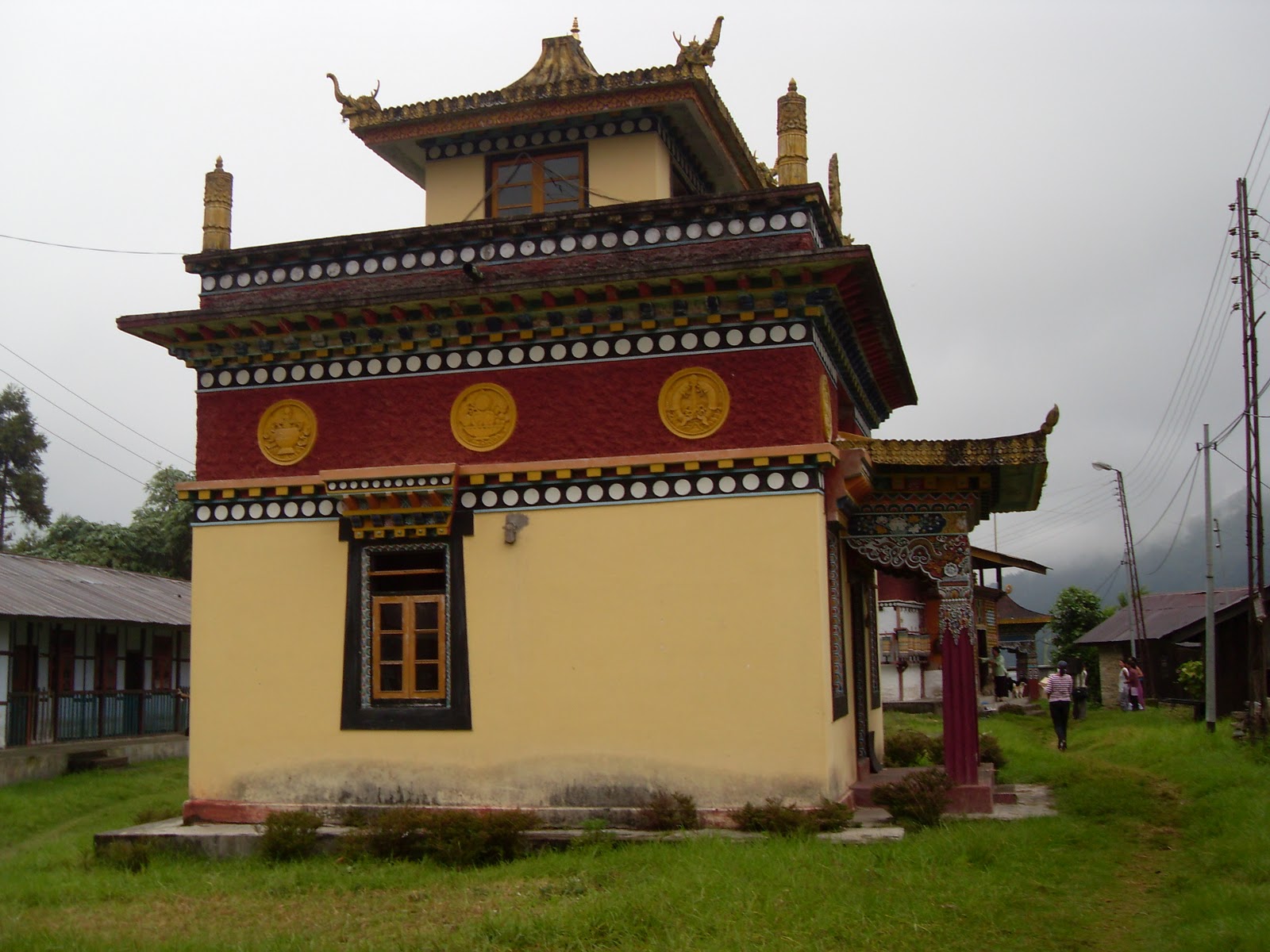
“Guardians of the Demajong” recounts the fascinating saga of a group of Buddhist monks who stopped a Himalayan mega dam project from being built, because of their belief that it would defile the sanctity of holy Buddhist treasures hidden in the Demajong region surrounding Mount Khanchendzonga (the world’s third highest mountain peak).
BIO: Christopher Rego, is an independent documentary filmmaker and television producer with over two decades of film and television production experience in both South and South East Asia. Christopher holds a post graduate degree in Sociology from Mumbai University, and has also completed a specialized three year training course in Film Direction from Asia’s premier film school, the Film and Television Institute of India (FTII), Pune (1984-1987).
SYNOPSIS
Some years ago, the Indian province of Sikkim witnessed an unusual protest by a group of local monks, led by Tshering Denzongpa, head priest of one of the region’s holiest monasteries. The monks agitation eventually brought a stop to a mega-dam project being planned in the Demajong region below Mount Khanchendzonga, the world’s third highest mountain.
What stirred the monks’ opposition to the dam was their belief that the founder of Sikkimese Buddhism, Guru Padmasambhava, has hidden five treasures somewhere across the Khanchendzonga landscape. The dam was perceived as a threat to these holy treasures that would defile the sanctity of Khanchendzonga - considered the guardian deity of the region.
To understand just how much reverence the people have for Khanchendzonga, consider one fact – it is the only major mountain peak that hasn’t been scaled to the top - all expeditions have stopped short of the peak in deference to local sentiment. Using Tshering as its central protagonist, the film recounts the fascinating saga of the monks’ protest, and explores the rich mosaic of cultural beliefs, rituals and traditions that connect the local community to Khanchendzonga.
The film thus becomes a reflection on how indigenous religio-cultural traditions, which ascribe sacredness to natural objects, connect to modern day ecological concerns regarding the conservation of natural heritage.
The film ends with the possibility of the dam project being revived - and leaves viewers with a key question – how much longer can the guardians of Khanchendzonga protect their sacred mountain?
TREATMENT
The film would be a documentary of 45 minutes duration, with English as its main language, and all interviews (in languages other than English) being subtitled.
The central quest of the film would be to explore the notion of the sacred landscape embedded in the traditional belief systems of local communities, and how these belief systems relate to a modern ecological worldview.
Accordingly, the film will try to identify a spectrum of characters rooted in this landscape who typify both traditional and modern “ways of seeing” the Demajong and are all in some way “guardians of the Demajong”. The story will unfold through their eyes, capturing their beliefs and concerns, and exploring what the Demajong means to each one of them.
The central character would be a senior llama like Tshring Denzongpa, someone well versed in the ancient scriptures and traditional beliefs who was an active participant in the agitation against the Rathong Chu hydel project.
We would locate this character within the space that defines his identity –his monastery; performing the daily religious rituals, reading the scriptures, interacting with fellow monks of the monastery, meditating. Through his story, we would also try and achieve insights into the philosophy of Tibetan Buddhism and the holistic worldview of nature enshrined in its discourse, which is the foundation of the region’s culture and value systems.
Another character could be an environmental research scientist studying some aspect of the region’s ecology. This character, while also rooted in this area, would have a somewhat different approach to the landscape – the outcome of his scientific grounding, which leads him to construct it more as an ecosystem, in terms of its flora,fauna and water resources and their economic and ecological values.
Juxtaposed between these two characters would also be people from the simple rural community of farmers and shepherds who inhabit the villages of this region. For them, the landscape is the place they call home, which gives them an identity, the land where their forefathers settled and found ways and means of survival in this mountainous terrain. Yet inherent in their everyday lives too is a reverence for the natural, which manifests itself in their daily religious practices, or in the folklore prevalent among them.
We would also film some of the colorful community rituals associated with the sacred landscape –the Bhumchu festival (held sometime in the month of March) and the Phang Lhabsol festival (sometime in the month of September).
Framing all these elements would be an introspective discourse that expresses the personal viewpoint of the filmmaker himself. This would be an exploration of the meanings of some of the film’s main themes – the “sacred”, the “mountain”, and the notions of “protection” and “conservation” using poetic juxtapositions of image and sound and quotes and references from a variety of texts that interpret these themes in a more reflective way.
VIDEO PROPOSAL
TRAILER OF EXCERPTS FROM PREVIOUS WORK (IN TWO PARTS)
FILMOGRAPHY:
LIST OF CREDITS (PRODUCER / DIRECTOR)
Documentaries
2011 – “A SAFER ASIA” A documentary highlighting the work and the regional
impact of the Asian Disaster Preparedness Centre, an intergovernmental
organization that serves as a resource centre for disaster risk reduction and
management in countries across Asia (DVCAM/ 30 mins / English / ADPC,
Thailand)
2010 – “THAT’S WHAT FRIENDS ARE FOR”: A documentary promoting
the work of the Arthritis Foundation (India), a support group for patients suffering
from arthritis (DVCAM/ 22 mins/ English/ AFI, Bangalore)
2009 -10 – “DANCE IN A CIRCLE”: (currently u n d e r p r o d u c t i o n )
A documentary about a multicultural arts project by a young German dancer who
is studying the meaning of gestures in Thai classical dance (DVCAM/ 50
mins/ English/ Crespo Foundation)
2009 -10 – “SIAMWALLAS”: A short pilot video screener for a proposed
multimedia video research and documentation series on the Indian diaspora in
Thailand (DVCAM/ 20 mins/ English/ UFAV)
2008-2009 – “WHEN THE MEKONG RISES” : A documentary on a major
programme being implemented in Vietnam and Cambodia to promote
community based systems for flood mitigation and management in the Mekong
Delta (DVCAM / 30 mins/ English/ Mekong River Commission / Asian
Disaster Preparedness Centre)
2003-2004 – “INVOCATIONS TO THE MOUNTAIN GODDESS “: A study
of conservation management of a UNESCO natural world heritage site in the
Indian Himalayas, advocating the need to combine conservation goals with the
development interests of the local community. The film was awarded the “best
film on the festival theme “Forests for Life” at the Vatavaran Film Festival, New
Delhi 2005 (DVCAM / 63 mins/ English/ UNESCO, New Delhi)
2003-2004 – “FAR FROM HOME “:A short documentary on the regional
programme being run by the United Nations Development Fund for Women
(UNIFEM) all across Asia to empower migrant women workers and ensure
protection of their rights (DVCAM / 12 mins. / UNIFEM, Bangkok)
2000/2001 – “FORESTS OF THE GODS” : A two-part documentary on the
ancient Indian eco-cultural tradition of sacred groves i.e. patches of forest
protected by local communities, because they are believed to be the abode of gods
or spirits.The film explores the symbiotic relationship between man and nature
enshrined in these groves, as well as the treasures of plant and animal bio2
diversity preserved in these small mosaics of centuries old vegetation (Betacam
Filmmaker, photographer and writer Wiek Lenssen studied Literature at the University of Nijmegen, with a major in Documentary Photography and Film. Since 1992 he produces and directs internationally awarded documentaries for cinema, international television and film festivals, predominantly about the global multicultural society and indigenous cultures. Apart from filmmaking he also writes books about the themes of his documentary films.
Der Ruf der Maya’s 2005 German edition of ‘The Maya Prophecies ‘ Hardcover & pocket
In production:
“The Hidden Front” book about the gold mining industry in South-East Asia (fictional)
“Grass.” poetic documentary about basket weaver in marshland 'De Peel' , Limburg/ Netherlands
" The Herd " feature film script development with Beaivváš Sami Theatre, Kautokeino , Norway
"India From the Inside": series producer for 6 Indian filmmakers, portraying their country (Unesco-project)
List of References: Channels/ co-producers/ distributors:
- UNESCO - La Cinquième, tv France - France 4- NRK-tv, Norway- ARD-telepool/ Bayerischer Rundfunk , Germany - ERT Greek Radio Television - RFO/ Dom TOM: tv for French overseas Territories - VPRO tv Netherlands - NCRV tv Netherlands- SBS 6 tv Netherlands - L1, tv province Limburg, Netherlands - JURA Filmprodukties Amsterdam/ Film CV Wandering Wolf - Netherlands cinema distribution/ LAVA filmdistribution, Amsterdam -Vastenaktie/ Cordaid, Netherlands - Royal Ethnology Museum of Leiden - Museums in the Netherlands and Germany - Petiet Publishers, Netherlands/ France - Kösel Verlag / Random House Publishing, München, Germany- Goldmann Arkana Publishing, München, Whistling Woods International, Bombay India.
INDRANIL CHAKRAVARTY (Associate Producer)
Indranil is Professor of Film Appreciation at Whistling Woods International Film Institute in Mumbai’s FilmCity which is the largest film school in Asia and rated as one of the ‘Top Ten Film Schools in the world’ by the Hollywood Reporter. He graduated in film direction from the International Film & TV SchoolinHavana, Cuba. He has been a consultant for the European Union and UNESCO and has lectured at several film institutes inIndiaand abroad. Among his publications are “The New Latin American Cinema : Readings from Within” (Calcutta, 1998) and “India’s Audiovisual Industry” (Munich, 2005). Many of his essays have been anthologized in books in English, Bengali and Spanish. He has made short films and some documentaries and is currently working on a feature film. He has served on the jury of several international film festivals inBrazil,Mexico, Spainand Cuba and is the director of a foundation called ILACI (Indo-Latin American Cultural Initiative). He is the coproducer of a documentary series between six countries called ‘To be a Human Being’ (2011) and is currently directing several major international cultural events across the world. He was the Convenor of the First All-India Screenwriters’ Conference at FTII in Pune (2006) and the UNESCO Asian Documentary Conference in Mumbai (2010).


 a